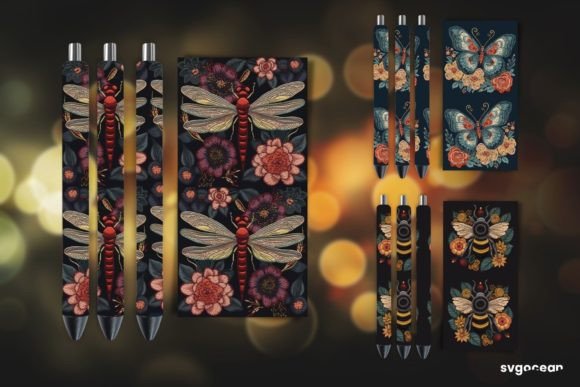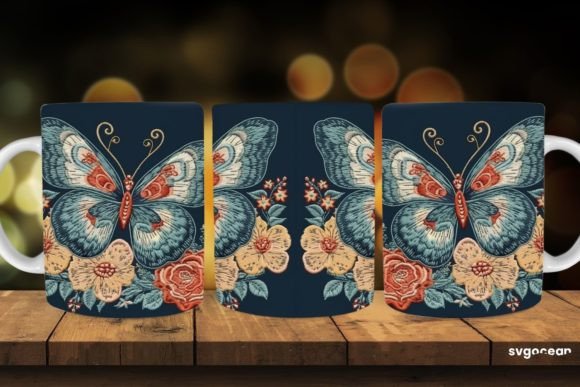
Embroidery Butterfly Mug Sublimation
I have spent years designing for the handmade market, and I know that a single design can make or break a weekend booth. When I first saw the Embroidery Butterfly Mug Sublimation listing in the Crafts category, my immediate thought was not about the digital file itself, but about where it would sit on a crowded table full of tote bags and aprons. As an experienced designer, I look past the pretty picture to see the production reality. Does this design hold up when stitched? Will it catch the eye of a passerby? And most importantly, will it sell?
The title suggests a specific application: an 11 oz mug wrap. However, the description notes that the file is provided as a PNG at 2925 x 1425 pixels with 300 DPI. This is a critical detail for any embroidery business owner. While sublimation prints directly onto coated mugs, an embroidery machine requires a digitized stitch file (like .DST or .PES). If you are planning to use this image as a visual asset for your own digitizing process or for creating printable mockups, the resolution is excellent. But if you intend to run this straight into a machine without converting it to a proper embroidery file, you will face significant challenges. For now, let us assume we are evaluating the artistic composition of the Embroidery Butterfly Mug Sublimation to see how it translates into physical goods.
First Impressions and Visual Appeal
In the world of craft fairs, the first three seconds determine a sale. The concept of a butterfly on a mug implies a soft, whimsical, and perhaps slightly rustic or farmhouse aesthetic. It feels decorative and premium, perfect for the modern boutique maker. A design featuring a butterfly often signals "spring," "gifts," or "home decor." On a busy display table, this type of imagery stands out because it offers a focal point that is both organic and structured.
If executed correctly, the Embroidery Butterfly Mug Sublimation design has the potential to be a strong seller for Etsy sellers and small shop owners. The butterfly motif allows for vibrant thread colors, which helps in drawing attention from across a room. Whether you style it as a cute accent or a large statement piece, the visual appeal relies heavily on the contrast between the thread and the fabric texture. A well-stitched butterfly can elevate a simple item into a high-value gift.
Product Versatility: Beyond the Mug
While the product name specifies a mug wrap, the true value for a commercial embroiderer lies in versatility. Can this design work on other items? Absolutely. Here is how I would deploy this design across a full craft fair collection:
- Tote Bag Design: Placing a butterfly motif on a canvas tote bag is a classic move. It adds personality to a utilitarian item. If the design is scaled down, it works beautifully as a pocket accent. If scaled up, it becomes the main feature of the bag.
- Apron Embroidery: Kitchen aprons are hot sellers. A butterfly near the bib or on the lower hem adds a touch of elegance to a functional garment. It appeals to home cooks who want their gear to look as good as it performs.
- Tea Towel Embroidery: This is perhaps the strongest candidate. Tea towels are lightweight, inexpensive to produce, and highly giftable. The design fits perfectly within the standard dimensions of a kitchen towel, making it an ideal impulse buy.
- Embroidered Patch: You could trim the design and add a backing to create a sew-on patch. These are trendy right now for adding character to denim jackets, beanies, or backpacks.
- Fabric Pouches and Pillow Covers: Small zippered pouches for makeup or pens are great low-cost items. Similarly, a pillow cover featuring this design can serve as a centerpiece for a bedroom or nursery display.
- Caps: Curved cap surfaces require careful hoop placement. A butterfly design might need to be adjusted to fit the curvature of a baseball cap, but the result can be very stylish for a younger demographic.
Production Realities and Stitch Density
As a professional, I must warn you about the practicalities of turning a digital image into a finished product. The term "sublimation" in the title refers to heat transfer printing, which is distinct from machine embroidery. If you are using the provided PNG to guide your digitizer or to test layout, keep in mind that embroidery has limitations that print does not.
Stitch Density: Butterflies often contain fine details like wing veins or antennae. In embroidery, these tiny details can get lost if the stitch density is too high, causing the fabric to pucker. Conversely, if the density is too low, the underlay may show through. You must ensure the design is optimized for the fabric you are using. Thick fabrics like denim or heavy canvas require more stabilizer and potentially fewer stitches to prevent puckering.
Thread Colors: The success of the Embroidery Butterfly Mug Sublimation depends entirely on your color choices. High-contrast threads against light fabrics usually yield the best results. If you are working with dark fabric, you will need a substantial underlay or a white backing to make the colors pop. Always test your thread palette before committing to a bulk order of materials.
Hoop Size and Spacing: Before hitting start, confirm your hoop size. A design meant for a mug wrap might be too wide for a standard 4x4 hoop, requiring multiple hooping steps or a larger frame. Ensure there is enough spacing around the edges to avoid cutting off parts of the butterfly wings during the stitching process.
Selling Strategy and Customer Engagement
For the craft fair seller, the story behind the product matters. When a customer picks up a tea towel or a tote bag with this design, they should feel the quality of the handmade product. The tactile experience of raised stitches adds value that a printed image cannot match. This is where the Embroidery Butterfly Mug Sublimation shines—it bridges the gap between digital art and tangible craftsmanship.
To maximize sales, focus on batch production. Create a cohesive set: a matching set of a mug, a towel, and a tote bag all featuring the same butterfly theme. This creates a "collection" feel that encourages customers to buy more than one item. Use high-quality photos for your Etsy listings or social media. Show close-ups of the stitches to prove the quality. A clear printable mockup showing the design on various products can help online buyers visualize the final result.
Careful Use Notes for Commercial Success
Before you rush to print thousands of labels or stitch hundreds of items, consider these critical factors:
- Check File Formats: The product description mentions a ZIP file containing a PNG. Remember that a PNG is a raster image, not a vector or embroidery format. You cannot feed a PNG directly into an embroidery machine. You will need to trace the image or hire a digitizer to convert it into a stitch file compatible with your machine.
- Test on Scrap Fabric: Never run a new design on your final inventory. Test on scrap pieces of the exact fabric you plan to use. Check for puckering, thread breaks, and clarity.
- Use the Right Stabilizer: The choice of stabilizer is vital. For lightweight tea towels, a cut-away stabilizer provides the best support. For stretchy fabrics, a tear-away might suffice, but always err on the side of extra support to maintain shape.
- Inspect Stitch Density: Look closely at the wings of the butterfly. Are there areas that are too dense? If so, the fabric might distort. Adjust the digitization settings if possible.
- Commercial Licensing: Verify the license terms of the original design assets. Ensure you have the right to sell finished products made from this design. Some licenses restrict resale or limit the number of units you can produce.
Final Thoughts on Market Potential
The Embroidery Butterfly Mug Sublimation represents a strong opportunity for creative entrepreneurs willing to put in the legwork of proper digitization and production testing. It fits perfectly into the current trend of handmade, personalized gifts. Whether you are selling at a local artisan market or running an online boutique, the key is presentation and quality control.
When done right, this design transforms a simple mug or towel into a cherished keepsake. It speaks to the buyer's desire for something unique and crafted with care. By paying attention to thread contrast, fabric texture, and proper stabilization, you can turn this digital concept into a profitable line of commercial embroidery products. Just remember: the magic happens in the details, and a little bit of preparation goes a long way in ensuring your booth stands out from the rest.