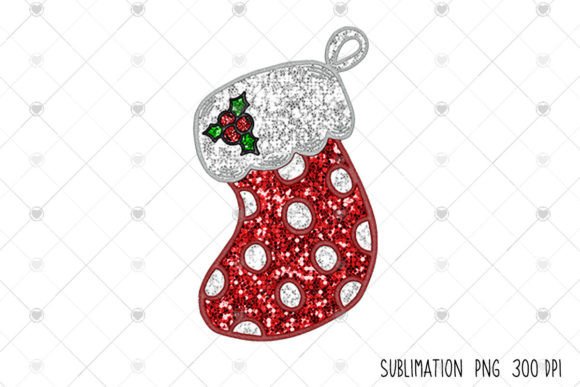
Stocking Clipart Faux Embroidery Sequins Review
As an experienced embroidery designer who has spent years refining designs for small business merchandise and branded patches, I approach every new asset with a critical eye. Today, I am reviewing the Stocking Clipart Faux Embroidery Sequins. While the product listing categorizes this under T-Shirt Designs and Graphics, my focus is strictly on its viability as a machine embroidery design for commercial applications. For small business owners, Etsy sellers, and apparel decorators looking to elevate their brand identity, the difference between a digital image and a stitchable reality is everything. This review evaluates how this specific design performs when translated from a screen to fabric.
First Impressions: Visual Personality and Brand Fit
The title Stocking Clipart Faux Embroidery Sequins immediately suggests a festive, textured aesthetic. The word "Faux" implies that the design mimics the look of sequin work without the actual hardware, which is a smart choice for durability and cost. Visually, this design likely strikes a balance between playful and premium. It feels friendly enough for a boutique or bakery but structured enough to maintain professionalism on staff uniforms.
For a handmade brand or a creative studio, this asset offers a touch of elegance that elevates standard embroidery. However, the "clipart" nature of the description requires caution. In the world of custom apparel, clipart often lacks the necessary digitization nuances for high-end results. We need to determine if this is a true vector-based embroidery file or a raster graphic converted into stitches. If it is designed to mimic sequins, it must have a specific texture in the fill patterns to avoid looking flat on a finished product.
Real-World Business Applications
Let us imagine a real scenario: a local coffee shop wants to launch holiday-themed merchandise. They are considering using Stocking Clipart Faux Embroidery Sequins for their winter collection. This design could serve multiple purposes beyond just a chest logo.
- Embroidered Patches: A classic application for this type of motif. Small business merch often relies on detachable patches for tote bags or denim jackets. The faux sequin effect would add a tactile element that customers love to touch.
- Staff Uniforms and Aprons: Imagine a barista wearing a black apron with this design embroidered on the pocket. The contrast of the "sequin" texture against the heavy canvas would look sophisticated and festive.
- Cap Embroidery: This design works well as a sleeve detail or a curved cap front accent. It adds a pop of visual interest without overwhelming the wearer.
- Tote Bag Design: For crafters selling at markets, a sturdy canvas tote featuring this design serves as a walking advertisement. It reinforces brand recognition every time a customer carries groceries or art supplies.
- Product Packaging Accents: High-end brands often embroider logos directly onto gift tags or hangtags. Using this design on packaging can significantly increase perceived value.
The versatility of Stocking Clipart Faux Embroidery Sequins makes it a strong contender for event merch, customer gifts, and seasonal campaigns. It bridges the gap between digital graphics and physical goods, allowing businesses to create a cohesive visual language across all touchpoints.
Where to Use With Caution
While the potential is high, there are specific scenarios where this design might struggle. As a designer, I advise testing this carefully before mass production.
- Small Patch Sizes: If you attempt to reduce this design to a size smaller than two inches, the "faux sequin" details may merge together. The individual elements that create the texture will be lost, resulting in a muddy blob rather than a crisp logo.
- Curved Surfaces: Cap fronts are notoriously difficult for detailed fills. If the design has high stitch density, it may pucker on the curve of a hat, distorting the intended shape.
- Dark Uniforms: Textured designs often rely on light and shadow to show depth. On dark fabrics, the faux sequin effect might not register unless you use a very specific thread color palette. Contrast is key here.
- Frequent Washing: While "faux" sequins are safer than real ones, they still involve dense stitching. On items like work shirts that undergo industrial washing, the tension on these threads must be managed correctly to prevent pulling or fraying.
- Textured Fabric: If you are embroidering on a rough, boucle, or heavily textured material, the stabilizer needs to be robust. The design may not lay flat on uneven surfaces, ruining the professional finish.
Impact on Brand Identity and Customer Trust
In the competitive landscape of small business merch, quality speaks louder than marketing slogans. A poorly executed embroidery job can damage customer trust and lower the perceived value of your products. Conversely, a well-executed embroidered patch or custom apparel piece signals attention to detail.
If Stocking Clipart Faux Embroidery Sequins is digitized correctly, it enhances brand identity by adding a layer of luxury. Customers associate high-quality stitching with reliability. When a buyer sees a crisp, textured logo on a tote bag or apron, they are more likely to engage with the brand and recommend it to others. It transforms a simple commodity into a memorable experience.
However, if the design appears pixelated or the stitch density is too low, it looks cheap. For a florist, pet brand, or creative studio, the visual consistency of your assets is vital. This design must align with your other design assets to maintain a professional image.
Practical Designer Notes for Production
Before you commit to running this design on your commercial embroidery machines, follow these essential steps to ensure success.
- Test in Black and White First: Convert the design to grayscale to check the stitch density. If the design looks solid and blocky in black and white, it will likely perform well. If it looks sparse, it may need densification.
- Check Small Patch Viability: Create a mockup at the smallest intended size. Ensure the "sequin" details remain distinct and do not bleed into one another.
- Review Thread Color Contrast: Select thread colors that maximize the texture. Metallic or variegated threads might enhance the faux sequin look, but test them first to ensure they don't cause needle breakage.
- Inspect Spacing and Hoop Size: Confirm that the design fits within your standard hoop sizes. If the design is larger than your hoop, you may need to re-digitize it or use a multi-hoop setup, which increases production time.
- Test on Real Fabric: Do not rely solely on digital mockups. Stitch the design on the actual fabric you plan to sell. Check for puckering, bird's nests, or thread breaks.
- Use Proper Stabilizer: High-density designs require strong backing. Always use cut-away stabilizers for stretchy fabrics like caps or t-shirts to prevent distortion over time.
- Create a Client Mockup: Before producing bulk orders, generate a printable mockup showing the design on various products (mugs, shirts, pillows). This helps clients visualize the final result and reduces revision requests.
- Confirm Commercial Licensing: Most importantly, verify the license terms. The description states this is for small business use to create and sell physical products, but you must confirm that you are allowed to use this digital embroidery file for unlimited commercial projects.
By following these guidelines, you can transform Stocking Clipart Faux Embroidery Sequins from a simple graphic into a powerful tool for your brand. Whether you are creating branded patches, uniform accents, or unique product labels, the right execution ensures that your hard work shines through. Remember, in the world of machine embroidery design, the devil is in the details. Take the time to test, refine, and perfect your process to deliver a finished product that your customers will cherish.