Tree Embroidery Design Review for Business Merch
As an experienced embroidery designer who has spent years refining designs for commercial use, I approach every new digital asset with a critical eye. When evaluating the Tree Embroidery Design, my primary focus is not just on how it looks on a screen, but how it translates to physical products that carry a brand's identity. This review explores whether this design is a viable asset for small business merchandise, branded patches, and custom apparel.
First Impressions: A Natural Fit for Brand Identity
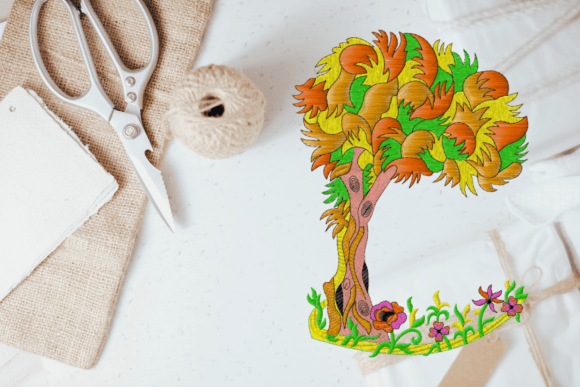
The title and description suggest a design rooted in nature, making it an ideal candidate for businesses that value organic aesthetics or sustainability. For a boutique, a florist, or a handmade shop, the Tree Embroidery Design offers a sense of grounded elegance. It feels professional yet accessible, avoiding the overly corporate look that can alienate customers seeking authentic connections.
In the context of brand identity, this design serves as a visual anchor. It suggests growth, stability, and community. Whether used as a chest logo accent or a subtle detail on a tote bag, it communicates a message of reliability without shouting. The versatility mentioned in the product description—suitable for clothes, pillows, and bed sets—indicates a design that can scale well across different product categories, from soft home goods to durable workwear.
Real-World Application: From Patches to Aprons
The true test of any machine embroidery design lies in its performance during production. Let us imagine a scenario where a local café or a creative studio wants to launch a line of branded merchandise. How does the Tree Embroidery Design hold up?
- Embroidered Patches: For staff uniforms or event merch, this design works exceptionally well as a patch. The natural imagery stands out against denim or canvas, creating a badge of honor for employees. It adds a touch of personality to standard work shirts.
- Apron Embroidery: In a bakery or florist setting, placing this design on the bib of an apron creates a focal point. It elevates the garment from a simple utility item to a piece of custom apparel that customers want to see.
- Tote Bag Design: As a mark on reusable bags, the design reinforces the eco-friendly narrative often associated with tree motifs. It turns a functional item into a walking advertisement for the brand.
- Cap Embroidery: For caps, the design needs to be balanced. If the stitch count is moderate, it can sit perfectly on the front panel, offering a clean, classic look that fits both casual and semi-professional settings.
The fact that this embroidery file comes in multiple formats is a significant advantage. It ensures compatibility with various commercial embroidery machines found in most shops, reducing setup time and technical friction. This flexibility allows designers to produce consistent results across different locations, which is crucial for maintaining visual consistency.
Strategic Considerations and Limitations
While the potential is high, a professional must also identify where caution is required. Not every surface is suitable for every design. When planning to use the Tree Embroidery Design for specific applications, keep the following constraints in mind.
- Small Patch Sizes: If you intend to create very small patches, such as those for lapels or children's clothing, you must inspect the design details closely. Fine lines may merge if the size is reduced too much, losing the definition that makes the design effective.
- Curved Surfaces: Cap fronts are curved, which can distort complex shapes. Ensure the design has enough negative space to accommodate the curve without bunching threads.
- High Stitch Density: Designs with dense fills can become stiff. On items like pillows or bed sets, this stiffness might be acceptable, but on lightweight fabrics or work shirts worn in warm conditions, it could cause discomfort or fabric pucker.
- Fabric Texture and Color: Dark uniforms require careful selection of thread colors. Lighter threads may not show up well against black or navy unless a high-quality underlay is used. Similarly, textured fabrics like heavy wool or fleece can hide the intricacies of the design.
- Frequent Washing: For items that undergo frequent laundering, such as kitchen aprons or team uniforms, the durability of the stitching is paramount. High-density areas are more prone to snagging or fading over time.
The Impact on Customer Trust and Product Value
Quality matters. A poorly executed digital embroidery file can damage a brand's reputation, while a well-executed one enhances perceived value. The Tree Embroidery Design, when stitched correctly, signals attention to detail. It tells the customer that the business cares about the quality of its output.
This attention to detail fosters customer trust. When a buyer sees a crisp, clean tree motif on a tote bag or a hat, they associate that precision with the quality of the product inside the bag or the service provided by the shop. It transforms a generic item into a premium handmade product feel, even if the base item is mass-produced. This perception is vital for Etsy sellers and craft business assets looking to compete in a crowded marketplace.
Essential Designer Notes for Production
Before committing to a large production run, a responsible designer must follow a rigorous testing protocol. Here are practical steps to ensure the Tree Embroidery Design delivers the best results:
- Test in Black and White: Start by stitching the design in monochrome to check the balance of light and dark areas. This helps verify that the design holds its shape regardless of thread color choices.
- Check Small Scale Performance: Create a mockup at the intended final size. Does the design lose detail? Is the spacing adequate? This step is crucial for determining if the design works for product labels or tiny accents.
- Review Thread Color Contrast: Select thread colors that pop against your target fabric. High contrast usually yields a more professional look, especially for logos.
- Inspect Spacing and Hoop Size: Ensure the design fits comfortably within your hoop limits. Overfilling a hoop can lead to distortion, while leaving too much empty space wastes time and material.
- Test on Real Fabric: Do not rely solely on stabilizer tests. Stitch on the actual fabric type (cotton, polyester, canvas) to see how the stabilizer interacts with the material and how the fabric behaves under tension.
- Create a Printable Mockup: Before cutting fabric, generate a printable mockup for client approval. This allows stakeholders to visualize the final product and approve changes before production begins.
- Compare with Other Assets: Place the design beside other brand elements to ensure it complements existing logos and typography. Consistency is key to a cohesive design assets library.
- Confirm Commercial Licensing: Always verify the licensing terms. Ensure you have the right to use the Tree Embroidery Design for commercial projects, including selling finished goods.
Final Thoughts on the Finished Product
The Tree Embroidery Design represents a strong opportunity for small businesses aiming to enhance their visual presence. Its connection to the Forest theme provides a versatile aesthetic that appeals to a wide range of industries, from agriculture to lifestyle brands. By carefully considering the application method, fabric choice, and production techniques, you can leverage this design to create memorable finished products.
Whether you are adding a subtle touch to a bed set or creating a bold statement on a staff uniform, this design offers the flexibility needed for modern branding. With proper execution, it becomes more than just a picture; it becomes a symbol of your business values, woven into the very fabric of your merchandise.